Key Fact of News
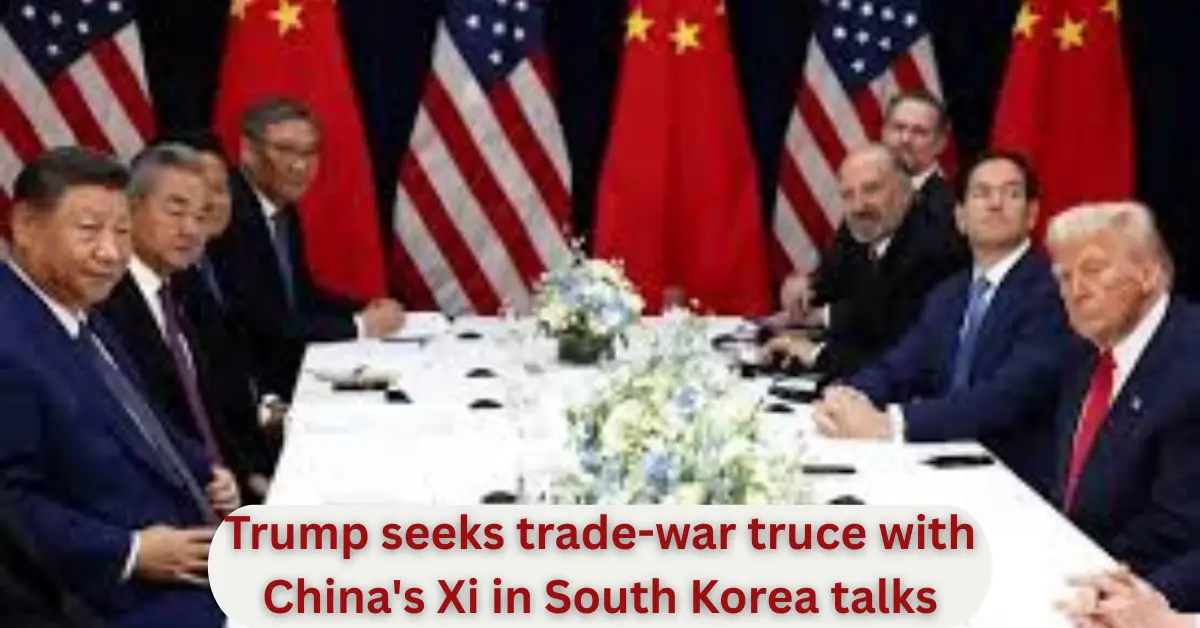
BUSAN: In a landmark diplomatic encounter, U.S. President Donald Trump met Chinese President Xi Jinping on Thursday at a South Korean air base in Busan, setting an optimistic tone for what could become a major trade-war truce between the world’s two largest economies. Their meeting marked the first face-to-face dialogue since 2019, aiming to resolve years of trade and technology disputes that have rattled global markets.
The talks coincided with the conclusion of Trump’s whirlwind Asia tour, which included new trade pacts with Japan, South Korea, and Southeast Asian nations. “We are going to have a very successful meeting. He is a very tough negotiator,” Trump said while shaking hands with Xi, who remained characteristically composed. Observers from Reuters reported that both sides were cautiously optimistic about reaching a mutual understanding to stabilize trade relations.
 Afghanistan Internet Blackout Sparks Global Concerns
 Pak-Afghan Tensions Surge as Iran, Qatar Push for Urgent Diplomacy
Xi told Trump through a translator that occasional friction between global powers was “normal,” yet emphasized that the two sides had reached “a fundamental consensus” on addressing key concerns. “I am willing to continue working with President Trump to lay a solid foundation for China-U.S. relations,” Xi said — signaling a rare alignment that could pave the way for a lasting trade-war truce.
China’s yuan strengthened to a near one-year high against the dollar as investors anticipated a relaxation of tensions. Stock markets in Tokyo, Wall Street, and Seoul reacted positively, reflecting hope that a global trade thaw could restore stability to supply chains disrupted over the past few years.
Inside the Busan talks — key takeaways 🇺🇸🇨🇳
Trump’s discussions with Xi covered tariffs, technology exports, and Beijing’s proposed restrictions on rare-earth minerals critical for high-tech manufacturing. Rare earths, essential for everything from smartphones to fighter jets, have been at the center of the trade dispute. Earlier this month, Beijing hinted at expanding export curbs on these materials, prompting the U.S. to threaten new 100% tariffs on Chinese goods.
However, according to U.S. Treasury Secretary Scott Bessent, negotiators reached an understanding to delay China’s rare-earth controls for at least a year. This delay forms part of the emerging trade-war truce that could restore confidence in the high-tech and automotive sectors. Bessent added that China also agreed to restart large-scale purchases of U.S. soybeans — a move critical to American farmers who suffered under previous tariff battles.
Trump highlighted his intention to reduce certain U.S. tariffs in return for Beijing’s cooperation in curbing the export of fentanyl precursors, a key ingredient in the deadly synthetic opioid responsible for thousands of overdose deaths in America. He also hinted that the Busan discussions could open the door for a future agreement on TikTok, the social media platform facing a U.S. ban unless its Chinese owners divest domestic operations. Related details appeared in Politico, suggesting that Washington views these talks as part of a broader strategic reset.
Markets react and global implications 💹
Financial markets responded immediately to reports of a possible trade-war truce. The yuan’s rise reflected growing confidence that Washington and Beijing would find a pathway to de-escalate tensions. Wall Street indices reached record highs, while Asian markets surged amid expectations that tariffs would soon ease. Analysts told The Financial Times that if the truce holds, it could mark “the single biggest confidence boost” to global trade in recent years.
Nevertheless, the fragility of such agreements remains a concern. Past deals have collapsed under political pressure and shifting priorities. Current tariff reductions — 55% for U.S. goods and 10% for Chinese imports — are set to expire by November 10, unless both sides formalize a new arrangement. If renewed, this framework could become the cornerstone of a longer-term trade-war truce that stabilizes major supply chains.
Strategic tensions simmer beneath optimism ⚔️
Despite positive signals, underlying geopolitical tensions persist. Recent reports from AP News revealed that Chinese H-6K bombers conducted “confrontation drills” near Taiwan — a stark reminder of the complex security backdrop behind these trade negotiations. U.S. Secretary of State Marco Rubio assured that Taiwan’s interests would not be compromised in any trade deal, reaffirming Washington’s commitment under the Taiwan Relations Act.
 Trump Warns FIFA World Cup 2026 Matches Could Be Moved from Unsafe Cities
 تاج محل تنازعہ: فلمی پوسٹر نے پھر بھڑکایا تاج محل تنازعہ
Why this meeting matters for the world 🌍
For businesses and investors, the trade-war truce could ease inflationary pressures by restoring stable supply chains. Tech manufacturers relying on rare earths, automakers sourcing components from Asia, and American farmers awaiting revived exports all have a stake in the outcome. The truce could also influence global energy and defense sectors, given that rare-earth materials are vital for EV batteries, wind turbines, and advanced weaponry.
For continued coverage of U.S.-China relations and their economic ripple effects, visit NewsCloud.pk — your trusted source for in-depth global political and trade updates.
FAQs
- What is the trade-war truce?
The trade-war truce refers to a proposed agreement between the U.S. and China to pause escalating tariffs and restrictions, focusing on cooperation in trade, rare-earth exports, and fentanyl control. - How does the truce affect global markets?
If successful, it could stabilize stock markets, reduce inflationary pressures, and restore global supply chain confidence. - Which industries benefit the most?
Technology, agriculture, automotive, and defense industries stand to gain the most from a lasting trade-war truce. - Will tariffs be reduced soon?
Officials have hinted that tariff reductions could follow if China implements its commitments on rare earths and fentanyl precursors. - Can the truce fail?
Analysts warn that without binding enforcement, the agreement could unravel amid ongoing geopolitical competition and domestic politics in both countries.