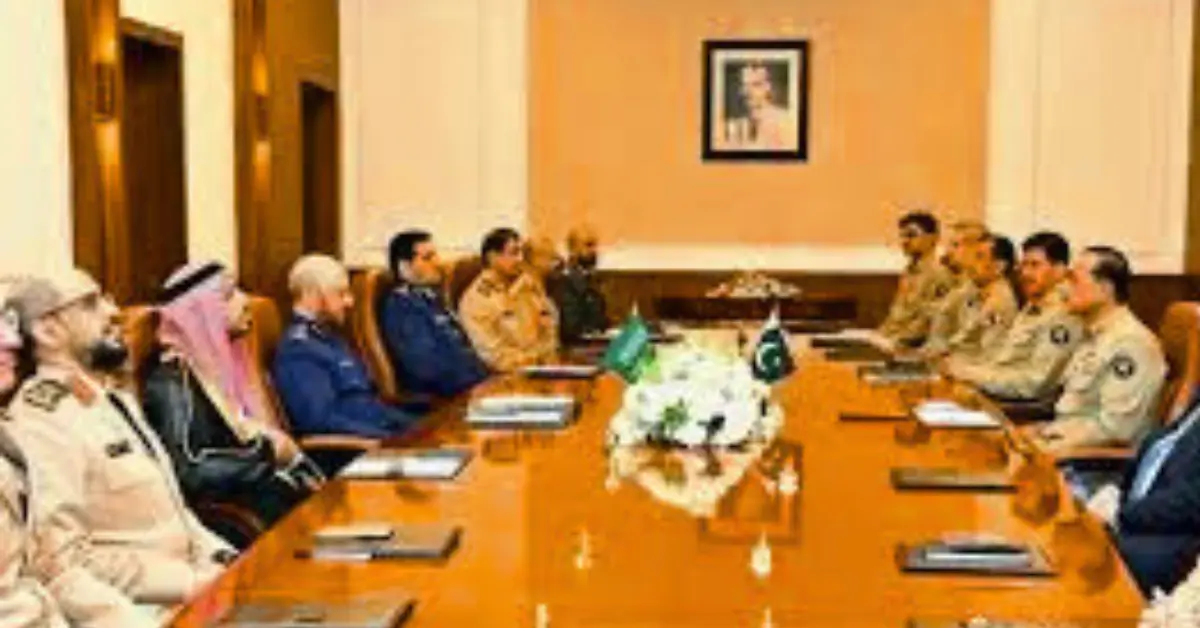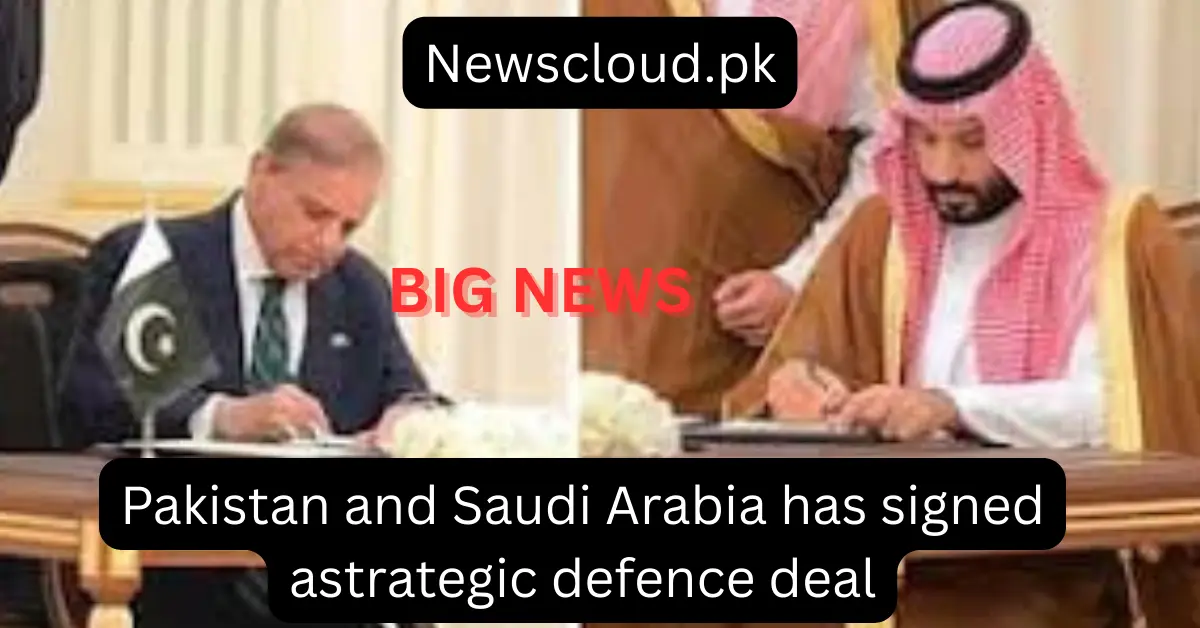
In a landmark development, Pakistan and Saudi Arabia have formalized a major mutual defence agreement: the Strategic Mutual Defence Agreement (SMDA). Signed on 17 September 2025 in Riyadh, during Pakistani Prime Minister Shehbaz Sharif’s state visit, this agreement commits both countries to treat any aggression against one as aggression against both.
Key Components of the Deal
Mutual Defense Agreement
The core clause of the agreement states: any act of aggression against Saudi Arabia or Pakistan will be viewed as an act against both states.
Comprehensive Military Cooperation
The pact is not just symbolic. It aims to strengthen various dimensions of defence cooperation: joint deterrence, military coordination, possibly sharing advanced technologies or military assets.
Ambiguities and Nuclear “Umbrella” Questions
A point of particular interest and debate is whether Pakistan’s nuclear capabilities might contribute to the defence posture of Saudi Arabia under this agreement. While Pakistani officials have emphasized that the mutual defence agreement does not explicitly mention nuclear weapons, phrases like “all military means” have raised speculation.
Context & Timing
The agreement comes amid regional security concerns and shifting alliances. Events such as Israeli airstrikes in Doha, tensions in the Gulf, and questions about the reliability of traditional security guarantees (especially from the U.S.) played roles.
Implications
Enhanced Deterrence
The mutual defence clause enhances deterrence by signalling that both nations are backing each other militarily. Potential adversaries may have to reconsider any action against either country.
Regional Security Realignment
The agreement could shift the balance of power in the Middle East and South Asia. Saudi Arabia is seen as diversifying its security partners beyond traditional alliances.
Nuclear Posture Scrutiny
Even though Pakistan says nuclear weapons are not “on the radar” of the treaty, international observers will closely watch how the nuclear dimension (if any) is interpreted and possibly operationalized.
Domestic & Diplomatic Fallout
Within Pakistan, the mutual defence agreement is being seen as a major upgrade in Pakistan-Saudi military ties. Diplomatically, other regional players (notably India, Iran, Israel) will assess how this pact affects their security calculus.
Reactions & Questions
Pakistan’s government has described the mutual defence agreement as defensive rather than offensive, calling it analogous to collective defence mechanisms like NATO. Analysts are debating how “real” the nuclear sharing or umbrella components may be, seeing much depends on implementation details. Some international concern or curiosity: India has made statements it is observing closely. Other Gulf and Muslim-majority countries may also look to join or form similar arrangements.
What to Watch Moving Forward
How the defence cooperation is operationalised — joint exercises, shared intelligence, deployment of forces, etc.
Any formal or informal statements clarifying the nuclear-related aspects.
Whether other countries join or seek similar pacts, deepening an “Islamic or Arab security framework.”
Responses from India, Iran, Israel, the U.S. and other global powers.
The impact of this on Pakistan’s military, economic, and diplomatic priorities (given Pakistan’s economic challenges).
Conclusion
The Pakistan-Saudi Strategic Mutual Defence Agreement represents a significant moment in the geopolitics of South Asia and the Middle East. By formalizing a pledge of mutual protection, the two nations have sent a strong signal of unity and deterrence amid an increasingly volatile regional landscape. While many details (especially around nuclear dimensions) remain ambiguous, this pact may well mark the beginning of a broader shift toward more diversified, regional defence architectures in the Muslim world.
For more such news must visit our website newscloud.pk.
FAQs
Q1: What is the Pakistan-Saudi Strategic Mutual Defence Agreement?
It is a defence pact signed in September 2025, committing both countries to treat aggression against one as aggression against both.
Q2: Does the mutual defence agreement include nuclear cooperation?
The agreement does not explicitly mention nuclear weapons, but phrases like “all military means” have raised speculation about Pakistan’s nuclear deterrent role.
Q3: Why was this agreement signed now?
It comes amid growing regional tensions, such as Israeli airstrikes in Doha and uncertainty around traditional Western security guarantees.
Q4: How are other countries reacting?
India, Iran, Israel, and global powers are watching closely. Some Gulf states may also consider joining or forming similar defence pacts.
Q5: What could this mean for regional security?
The agreement strengthens deterrence, may realign security balances, and could lead to broader regional defence cooperation among Muslim-majority nations.