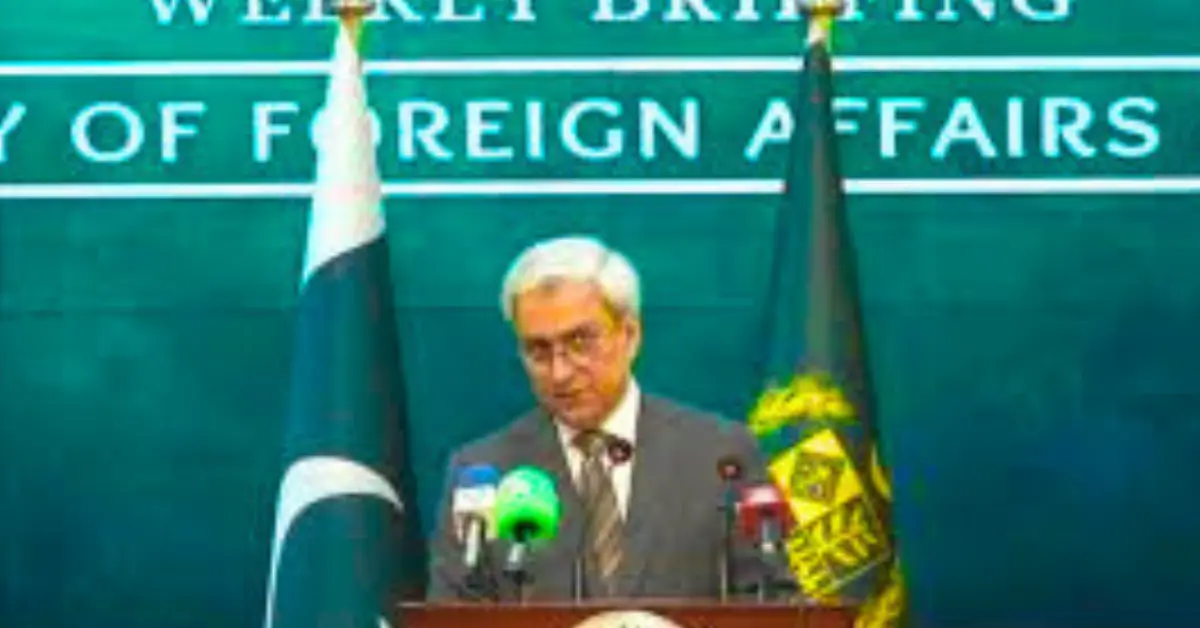
At his weekly briefing on October 31, Foreign Office spokesperson Ambassador Tahir Hussain Andrabi reiterated that Pakistan does not seek further escalation with the afghan taliban and remains committed to a mediated political solution, while insisting Kabul must take concrete, verifiable action against terrorist networks that threaten Pakistan. The statement underlined Islamabad’s restraint and its readiness to respond firmly should provocations continue.
Istanbul talks: who mediated and what was agreed
Delegations from Pakistan and the afghan taliban continued talks in Istanbul from October 25–29, in sessions extended beyond the original timetable to allow deeper engagement. The meetings were mediated by Türkiye and Qatar and produced a joint framework to maintain the ceasefire and explore a monitoring mechanism to prevent cross-border attacks. For the mediators’ official account, see the joint statement by Türkiye’s foreign ministry.
Pakistan’s central demand: stop using Afghan soil for attacks
Islamabad’s negotiating position is direct: Afghan soil must not be used to plan or launch attacks inside Pakistan. The Foreign Office specifically named groups Islamabad blames for recent violence and demanded verifiable dismantling of their networks — a demand the afghan taliban must answer with operational measures rather than promises. Independent reporting confirms that both sides agreed to sustain the ceasefire while working on verification steps.
Why Pakistan used the labels Fitna al-Khawarij and Fitna al-Hindustan
Pakistan has, in official correspondence and public statements, referred to certain militant networks as Fitna al-Khawarij and Fitna al-Hindustan to identify actors it accuses of fomenting unrest from across the border; copies of such references appear in government documents. By naming these groups, Islamabad seeks to raise the political and diplomatic cost of inaction and to press the afghan taliban for tangible countermeasures.
Border clashes, ceasefires and regional concerns
The recent negotiations follow weeks of intense exchanges along the Durand Line that left dozens dead and prompted international calls for restraint. Regional mediators have urged both sides to extend the ceasefire and formalise a monitoring mechanism to lessen the risk of renewed clashes — a priority highlighted in global coverage by Reuters and Al Jazeera.
What Islamabad hopes to see on November 6
Pakistan has signalled it expects the afghan taliban to present verifiable steps, including credible monitoring and third-party verification, at the follow-up talks scheduled for November 6. Islamabad’s public posture combines diplomatic engagement with a clear warning that deterrence measures remain available if militant attacks persist.
Impact on trade, transit and civilians
Beyond the security calculus, sustained de-escalation is crucial for trade and civilian safety: disruptions to transit routes and border checkpoints affect supply chains and local livelihoods. Pakistan has already taken concessions this year to facilitate Afghan transit and hopes a lasting settlement with the afghan taliban will protect commerce and ease humanitarian pressures; for continuing coverage follow the live updates and analysis at NewsCloud. Visit our coverage at newscloud.pk for curated reporting and source links.
What to watch next
Key indicators to watch are: (1) whether the afghan taliban accepts third-party monitoring; (2) whether named militant networks are disrupted in ways Pakistan can verify; and (3) whether mediators such as Türkiye and Qatar secure an implementable verification regime. These will determine if diplomacy converts the current ceasefire into a durable reduction in violence.
FAQs
- Q: What is Pakistan’s position toward the afghan taliban?
A: Pakistan says it does not seek escalation and prefers diplomacy, but it demands that the afghan taliban take concrete, verifiable action against militant networks operating from Afghan soil. - Q: Who mediated the recent Pakistan–Afghanistan talks?
A: Türkiye and Qatar facilitated the Istanbul talks (Oct 25–29) and have been central to efforts to sustain the ceasefire and design monitoring mechanisms. - Q: What are Fitna al-Khawarij and Fitna al-Hindustan?
A: These are labels used in Pakistani official correspondence to refer to groups Islamabad accuses of fomenting attacks from across the border; Pakistan is pressing the afghan taliban to act against them. - Q: When is the next round of talks?
A: A follow-up session was scheduled for November 6 to build on the Istanbul discussions and to seek verifiable confidence-building steps. - Q: Where can I follow authoritative updates?
A: Trusted outlets such as Reuters and Dawn provide ongoing reporting; for curated local coverage and links to primary statements visit newscloud.pk.