Key Details of the News 📰
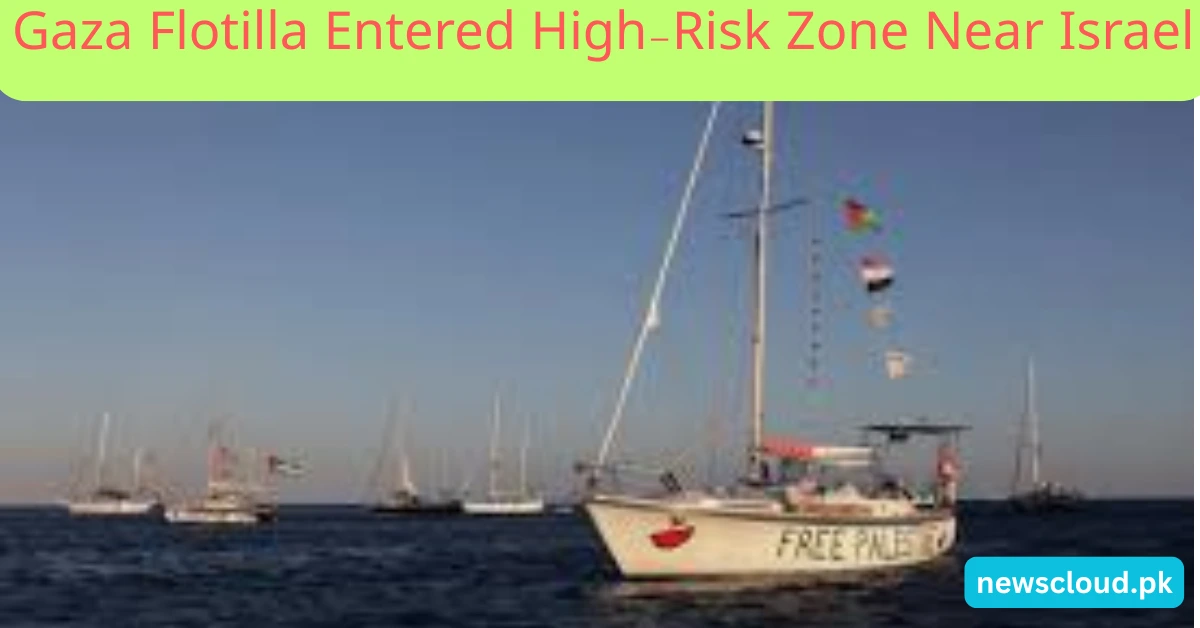
The Gaza Flotilla, an international convoy carrying humanitarian aid, announced on Wednesday that it has entered a high-risk zone close to Gaza’s waters. According to the Global Sumud Flotilla, several of its boats were approached by unidentified vessels—some sailing without lights—before eventually departing.
The flotilla, consisting of over 40 civilian boats and more than 500 participants, includes parliamentarians, lawyers, activists, and renowned Swedish climate campaigner Greta Thunberg. The mission aims to challenge Israel’s blockade on Gaza and deliver essential supplies to Palestinians facing humanitarian crises.
Italy, which had been monitoring the convoy with a naval frigate, has now announced it will cease military support, leaving activists more exposed to potential Israeli interception. Reuters and other international outlets confirm that the decision has sparked concern among flotilla members.
Background: A Mission with History 🌐
The Gaza Flotilla movement has a long and controversial history. Since 2010, several international convoys have attempted to breach Israel’s maritime blockade on Gaza, often facing violent confrontations and detentions. The most infamous incident occurred in May 2010 when Israeli forces intercepted the Mavi Marmara, leading to the deaths of 10 Turkish activists.
The current Global Sumud Flotilla has declared that it is fully aware of the risks. Organizers stated via Telegram:
“We have now entered the high-risk zone, the area where previous flotillas have been attacked and/or intercepted. We are on high alert.”
The flotilla maintains that its mission is purely humanitarian, with the goal of challenging what it calls the “illegal and inhumane blockade” imposed on Gaza.Read more.
Italy’s Withdrawal and Proposed Compromise ⚓
The Italian Defence Ministry confirmed that its naval vessel, which had been shadowing the flotilla for safety, will withdraw once the convoy reaches 150 nautical miles (278 km) from Gaza’s shores. Officials suggested a compromise plan under which the flotilla would unload its aid in Cyprus for subsequent transfer to Gaza through official channels.
However, flotilla leaders rejected the proposal, insisting that such an arrangement would defeat the purpose of their mission.
“The flotilla sails onwards. The Italian navy will not derail this mission. The humanitarian demand to break the blockade cannot be walked back to port,” said the Global Sumud Flotilla in a statement.
International Reactions 🌍✈️
The situation has triggered strong international debate:
-
Pro-Palestinian activists argue that the flotilla highlights the urgency of addressing Gaza’s humanitarian crisis, where shortages of medicine, food, and clean water remain dire.
-
Israeli officials, however, insist the blockade is a security necessity, preventing weapons smuggling into Gaza. They have warned against attempts to breach the naval restrictions.
-
European politicians have called for restraint. Some lawmakers onboard the flotilla have urged the EU to pressure Israel to allow safe passage.
-
Social media platforms have seen hashtags like #GazaFlotilla and #BreakTheBlockade trend globally, amplifying the convoy’s message.
Potential Impact on Global Politics 📊
The Gaza Flotilla crisis is more than a regional issue; it has implications for global diplomacy and security. If Israeli forces intercept the convoy, tensions with European governments could escalate, especially given the presence of parliamentarians and prominent figures like Greta Thunberg.
Experts warn that a confrontation at sea could strain Israel’s diplomatic relations with key allies, while also fueling international protests. Conversely, if the flotilla successfully delivers aid, it may embolden future missions and increase pressure on Israel to reconsider its blockade strategy.
From an economic perspective, heightened tensions in the Eastern Mediterranean could impact shipping routes and regional trade stability. Humanitarian organizations stress that failure to resolve the blockade issue will continue to harm millions of civilians in Gaza.
Conclusion 🌍⚡
The Gaza Flotilla has now entered its most dangerous phase, sailing into a high-risk zone where past missions have faced deadly consequences. With Italy stepping back, the convoy remains determined to push forward despite threats of interception.
This unfolding story is a powerful reminder of the intersection between humanitarian aid, world politics, and international diplomacy. The coming days will reveal whether the flotilla becomes a symbol of resistance or faces another tragic confrontation. For now, the world watches as the Gaza Flotilla challenges one of the most contentious blockades in modern history.
For more news ust visit our website newscloud.pk.
❓ FAQs
1. What is the Gaza Flotilla?
The Gaza Flotilla is an international convoy of civilian boats carrying humanitarian aid, activists, and lawmakers. Its main goal is to challenge Israel’s blockade on Gaza and deliver essential supplies directly to Palestinians.
2. Why is the Gaza Flotilla entering a high-risk zone?
The flotilla has now entered the high-risk maritime zone near Gaza, an area where past flotillas have been intercepted by Israeli forces. Organizers say they are prepared for possible confrontation but insist the mission is peaceful and humanitarian.
3. Who is participating in the Gaza Flotilla 2025?
More than 500 people are onboard, including parliamentarians, lawyers, activists, and climate campaigner Greta Thunberg. The convoy consists of over 40 civilian boats.
4. Why did Italy withdraw its support for the Gaza Flotilla?
Italy announced it would stop escorting the flotilla with a naval frigate once it reaches 150 nautical miles from Gaza. Instead, Italy proposed that the aid be unloaded in Cyprus and then delivered to Gaza—a compromise rejected by flotilla organizers.
5. What could be the global impact of the Gaza Flotilla?
Experts warn that any Israeli interception could lead to diplomatic tensions with European governments and increase international pressure on Israel to ease the blockade. It may also inspire future flotillas and intensify the debate on humanitarian access to Gaza.