Key Facts
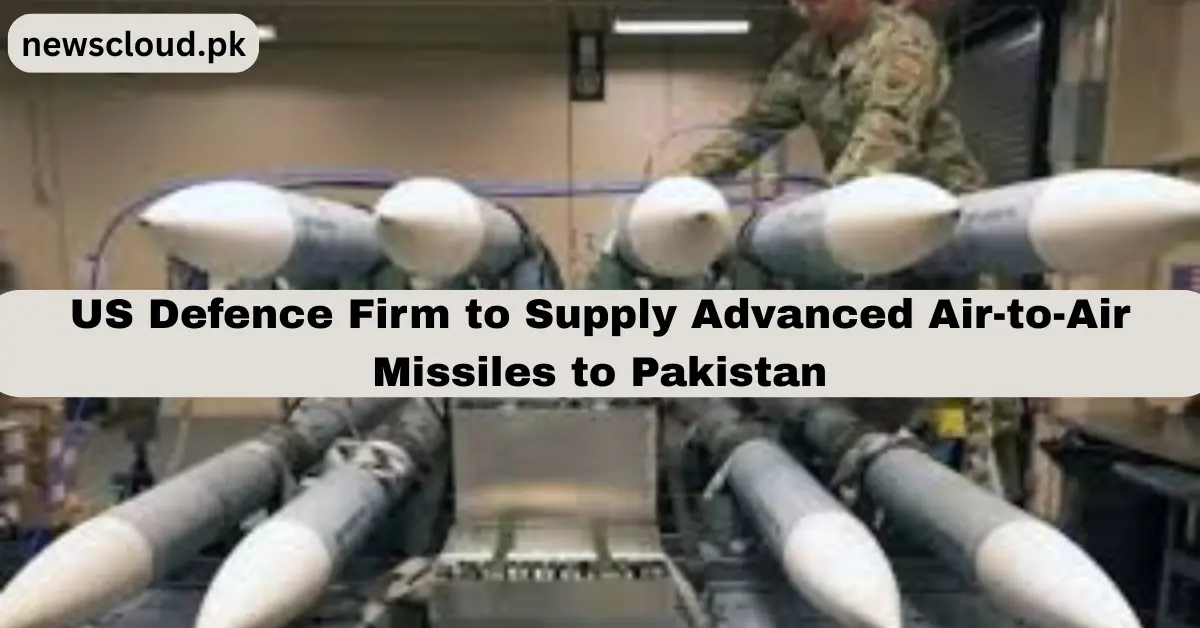
AMRAAM to Pakistan, In a move that signals renewed defence engagement, Raytheon was awarded a $41,681,329 firm-fixed-price contract modification (P00026) that officially adds Pakistan to the list of AMRAAM customers. The U.S. Department of Defense contracts announcement dated Sept. 30, 2025 (DoD contracts) amended contract FA8675-23-C-0037 for production of the AMRAAM C8 and D3 variants, raising the contract’s cumulative face value to approximately $2.512 billion. Work will be performed in Tucson, Arizona, and the contract notes an expected completion date of May 30, 2030. Read the DoD contract notice here.
AMRAAM to Pakistan explained
The modification funds additional production lots and obsolescence mitigation for the latest AMRAAM blocks, specifically the C8 and D3 variants. These upgrades emphasise software updates, parts refreshes and production engineering that improve reliability and prolong operational life. The decision to include Pakistan in the contract amendment creates a formal channel for AMRAAM to Pakistan under the U.S. Foreign Military Sales framework, grouping Islamabad with multiple NATO and non-NATO partners who already receive AIM-120/AMRAAM equipment and support. This step makes procurement and future sustainment clearer and helps stabilise supply chains that benefit all programme participants.
 Justice Aminuddin Set to Be Sworn In as First Chief Justice of FCC
 Pakistan Stock Exchange Surges Over 166000: Key Drivers Behind Record Rally
Why AMRAAM Matters?
The AMRAAM (AIM-120) family is a radar-guided, beyond-visual-range (BVR) missile that has been continuously modernised for decades. C8 and D3 lines focus on obsolescence mitigation, software improvements, datalink resilience and improved engagement profiles that bolster the missile’s lethality and interoperability. Raytheon/RTX describes AMRAAM as a combat-proven air-dominance weapon integrated on dozens of fighter platforms (RTX AMRAAM), and the U.S. Air Force fact sheet underlines its all-weather BVR mission set. Those features explain why supplying AMRAAM to Pakistan represents a capability step rather than a simple inventory addition.
Regional Implications
Supplying AMRAAM to Pakistan arrives at a moment of warmer diplomatic and commercial engagement between Washington and Islamabad. Local reporting has linked the amendment to broader talks and memoranda that touch on trade, critical minerals and infrastructure, giving the change both strategic and economic context (Dawn). Operationally, an AMRAAM to Pakistan capability enlarges Islamabad’s beyond-visual-range options and improves its ability to deter or respond to aerial threats at greater stand-off distances; politically, it signals renewed defence cooperation and increased interoperability with Western systems.
Delivery timeline, manufacturing and programme partners
The DoD contract notice identifies Tucson, Arizona as the production site and projects contractual completion by May 30, 2030. AMRAAM production is set up to feed U.S. service requirements and Foreign Military Sales customers simultaneously; that model helps stabilise spares pipelines and sustainment flows. Raytheon’s recent test and software-driven performance updates are expected to feed directly into C8/D3 production lots, improving effective range and engagement performance over time and supporting longer-term viability of AMRAAM to Pakistan deliveries.
What this means for Pakistan’s Air Force and integration challenges
Receiving AMRAAM to Pakistan can significantly expand the Pakistan Air Force’s beyond-visual-range engagement options, particularly for F-16 variants and other Western-origin aircraft that can be fitted for AIM-120 family weapons. Integration is not automatic: avionics and fire-control software, datalink certification, flight testing and pilot/ground-crew training are required to ensure safe and effective employment. Sustainment and spare-parts pipelines will be essential to convert the acquisition into sustained operational readiness. Political clearances, export licensing, and long-term logistics agreements will shape the pace and scope of fielding. 🤝
 Pakistan Agrees to Restart Talks with Afghan Taliban in Istanbul
 PM Shehbaz Orders Probe into AJK Protests, Expands Negotiation Committee
For up-to-the-minute reporting and Pakistan-centred analysis on defence developments such as AMRAAM to Pakistan, visit NewsCloud for expert coverage and context. 🔗
FAQs
- Q: What does the contract modification specifically authorise? A: The Sept. 30 DoD notice records a $41,681,329 modification (P00026) to FA8675-23-C-0037 to fund production of AMRAAM C8 and D3 variants, raising the total contract value to about $2.512 billion.
- Q: When will the AMRAAM production be completed? A: The contract lists May 30, 2030 as the expected completion date, though actual Foreign Military Sales deliveries to individual countries follow separate schedules and timelines.
- Q: Are AMRAAM C8/D3 compatible with Pakistan’s current fighters? A: C8 and D3 variants are designed for broad platform interoperability; many F-16 configurations can be made compatible but platform-level integration, testing and certification are required before operational use.
- Q: Will this materially change the strategic balance in South Asia? A: Advanced air-to-air missiles strengthen defensive and deterrent posture, but regional balance depends on doctrine, force posture, supporting systems and diplomacy; the inclusion of AMRAAM to Pakistan should be viewed in that broader strategic context.
- Q: Where can I read the official contract notice and learn more? A: The Department of Defense contracts release for Sept. 30, 2025 contains the full modification text; see the DoD contracts page cited above.