Key Details of the News
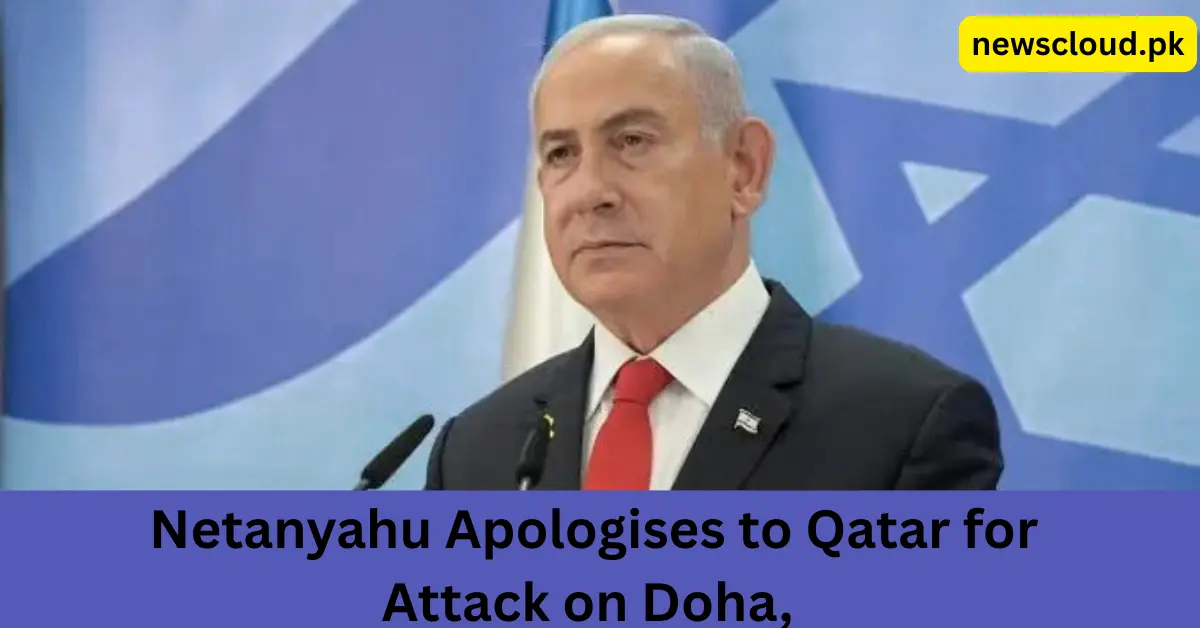
Israeli Prime Minister Benjamin Netanyahu has formally apologised to Qatar for an Israeli strike in Doha, according to a source close to the matter who spoke to Reuters. The phone call took place on Monday while Netanyahu was in Washington meeting U.S. President Donald Trump to discuss a potential Gaza ceasefire deal.
The call was made to Qatari Prime Minister Sheikh Mohammed bin Abdulrahman Al-Thani, marking a rare direct diplomatic gesture during heightened tensions. Reports suggest a Qatari technical team is also at the White House for ongoing talks.
Background and Reactions
The apology comes at a sensitive time when Washington is actively pushing its 21-point Gaza peace plan, which President Trump described as a “very confident step” toward ending the war. Trump’s remarks during his joint appearance with Netanyahu at the White House highlighted his determination to broker what he calls a “historic deal.”
Meanwhile, Prime Minister Shehbaz Sharif of Pakistan welcomed Trump’s initiative, stating on X that durable peace between Palestinians and Israelis would bring stability and economic growth to the entire Middle East. He also reiterated support for a two-state solution, urging global leaders to back the proposal.
Internationally, the United Arab Emirates (UAE) has pressed Netanyahu to endorse Trump’s plan and abandon any ambitions of annexing the West Bank, according to Reuters. Domestically, opposition leader Benny Gantz described the proposal as a “tremendous opportunity,” further increasing pressure on Netanyahu.
Humanitarian Concerns
While diplomacy unfolds, the humanitarian crisis in Gaza continues to escalate. UNICEF has sounded the alarm over 25 premature babies in incubators trapped in a hospital under heavy shelling in Gaza City. According to Palestinian health officials, tanks have surrounded the area, putting both patients and medical staff at extreme risk.
The UNRWA chief also appealed to the United Nations General Assembly (UNGA), urging world leaders to “put an end to this hell” as the death toll in Gaza surpassed 66,000 lives since October 2023, with more than 168,000 injured.
Potential Global Impact 📊
If Trump’s Gaza plan gains traction, it could reshape global politics and diplomacy, particularly U.S. relations with Middle Eastern nations. Analysts warn, however, that without international consensus and humanitarian safeguards, the proposal may struggle to achieve lasting peace.
Markets and political observers remain cautious, noting that peace in Gaza would not only ease human suffering but also improve economic confidence in the wider region. For Israel, agreeing to the plan could strengthen ties with Gulf nations, while for the U.S., it represents a test of Washington’s ability to balance diplomacy and hard security concerns.
Conclusion
The intersection of international news, world politics, and diplomacy has taken center stage with Netanyahu’s apology to Qatar and Trump’s renewed push for a Gaza peace deal. While the apology signals a softer diplomatic tone, the success of Trump’s initiative will depend on how regional powers, humanitarian agencies, and domestic Israeli politics align in the coming weeks.
Get fastest update on national and international news on newscloud.pk.
FAQs
Q1: Why did Netanyahu apologise to Qatar?
Netanyahu apologised after an Israeli strike in Doha, aiming to ease tensions with Qatar while peace talks were underway in Washington.
Q2: What is Trump’s Gaza peace plan?
Trump’s plan is a 21-point proposal designed to secure a ceasefire, return hostages, and pave the way toward a two-state solution between Israel and Palestine.
Q3: How has the international community reacted?
Countries like Pakistan and the UAE have welcomed the proposal, while opposition leader Benny Gantz in Israel called it a “tremendous opportunity.”
Q4: What humanitarian concerns exist in Gaza right now?
According to UNICEF, at least 25 premature babies in incubators are at risk due to ongoing shelling, and the Gaza death toll has exceeded 66,000 since October 2023.
Q5: What impact could this peace plan have on global politics?
If successful, the plan could improve U.S. credibility in the Middle East, strengthen Israel’s ties with Gulf nations, and reduce regional instability.