🔥 Deadly Protests Rock Azad Jammu and Kashmir
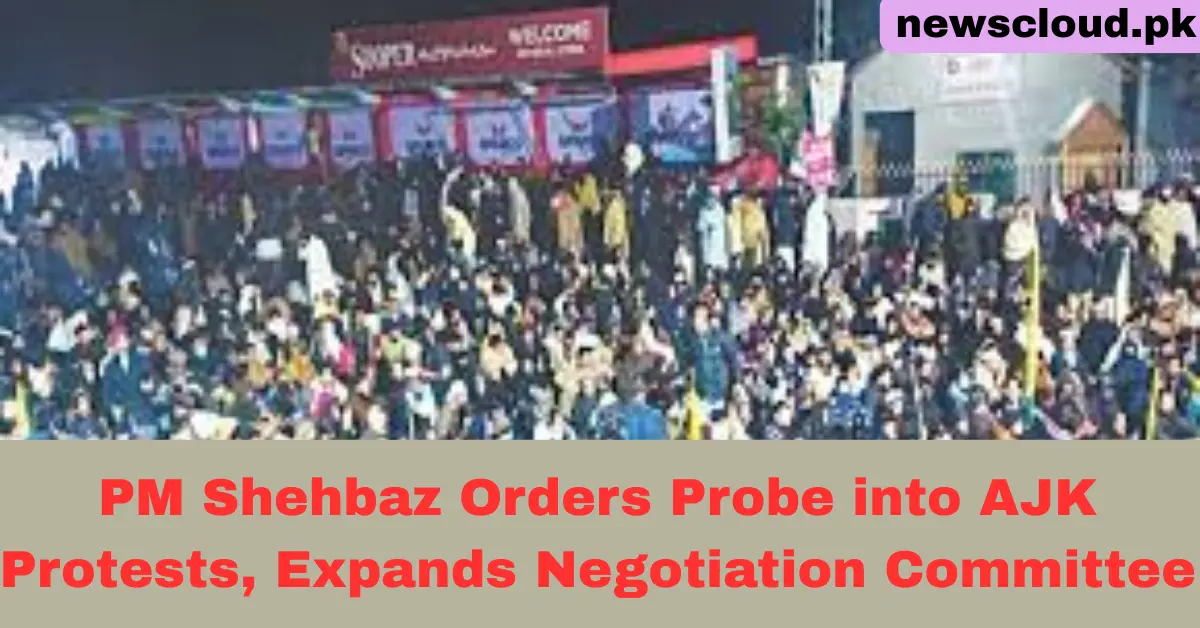
A wave of violent demonstrations in Azad Jammu and Kashmir (AJK) has claimed the lives of at least six civilians and three police personnel, leaving scores injured. The unrest was spearheaded by the Awami Action Committee (AAC), which had presented a wide-ranging list of demands to the government. In response, Prime Minister Shehbaz Sharif has ordered a transparent inquiry into the incidents, announced compensation for victims’ families, and expanded the federal negotiation committee to de-escalate the crisis. Visit NewsCloud.pk for full updates.
According to AJK authorities, nearly 172 police personnel were injured, with 12 in critical condition, while around 50 civilians also sustained injuries amid clashes. The unrest in Muzaffarabad and other areas has raised concerns about political stability and the government’s ability to address longstanding grievances in the region.
🤝 PM Shehbaz Expresses Concern, Calls for Peace
In an official statement, Prime Minister Shehbaz Sharif expressed deep sorrow over the tragic loss of lives and emphasized that peaceful protest is a democratic right guaranteed under the Constitution. However, he appealed to the demonstrators to avoid violence and disruption of public order.
“Government is always ready to resolve the issues of its Kashmiri brothers,” he said, assuring that his administration would personally oversee negotiations and ensure grievances are addressed. More details are available on The News International.
👥 Negotiation Committee Expanded
To push forward the reconciliation process, PM Shehbaz Sharif expanded the negotiation committee, which will immediately travel to Muzaffarabad. The committee now includes:
- Federal Minister Sardar Yusuf
- Federal Minister Ahsan Iqbal
- Senator Rana Sanaullah
- Former AJK President Masood Khan
- Qamar Zaman Kaira
The team has been instructed to ensure a “lasting solution” and deliver recommendations directly to the Prime Minister’s Office for swift implementation.
📜 90% of Demands Already Accepted, Says Government
The crisis originates from the AAC’s 38-point charter of demands, which include eliminating 12 reserved legislative seats for refugees, reducing cabinet size, and rolling back “elite privileges”.
According to Federal Minister Tariq Fazal Chaudhry, nearly 90% of these demands have already been accepted by the government. Speaking at a press conference with AJK Prime Minister Chaudhry Anwar-ul-Haq, he stressed that protests were unnecessary when the government had shown willingness to compromise. For background, see BBC News Asia.
🕊️ AJK Government Urges Dialogue
AJK Premier Anwar-ul-Haq insisted that negotiations were the only civilized and democratic way to resolve disputes. He reiterated that most demands had been addressed and the remaining could be discussed openly.
“The government is willing to even reconsider the privileges of the cabinet if necessary,” he said, urging the AAC to abandon street protests and return to the dialogue table. He also warned that prolonged agitation could push the region into anarchy, stressing that further clashes would only deepen the crisis.
🔍 What Lies Ahead for AJK?
The situation in AJK is being closely monitored both domestically and internationally, as the unrest threatens to destabilize a sensitive region. The protesters’ demands—centered on governance reforms, constitutional changes, and socioeconomic justice—highlight deep-rooted discontent among the people.
While the government claims progress in meeting most demands, mistrust between the AAC and authorities has stalled negotiations. Analysts believe the expanded negotiation committee, coupled with Shehbaz Sharif’s direct involvement, may pave the way for a breakthrough—provided both sides commit to constructive engagement. More insights at Al Jazeera.
✅ Conclusion
The Muzaffarabad protests serve as a reminder of the fragility of peace and governance in AJK. PM Shehbaz Sharif’s call for calm, expansion of the negotiation committee, and assurance of addressing grievances indicate the federal government’s seriousness in resolving the crisis.
However, the ultimate test will be whether both the government and the Awami Action Committee can set aside mistrust, ensure public safety, and work toward a political settlement that reflects the aspirations of the Kashmiri people. Stay tuned on NewsCloud.pk for updates.
❓ FAQs – AJK Protests 2025
Q1: What triggered the AJK protests in Muzaffarabad?
The protests were led by the Awami Action Committee (AAC), which issued a 38-point charter of demands. Key issues include ending reserved seats for refugees in the legislative assembly, reducing the size of the cabinet, and rolling back privileges for elites.
Q2: How many people were killed and injured in the AJK protests?
At least six civilians and three police personnel lost their lives. Nearly 172 police officials were injured—12 critically—while around 50 civilians also sustained injuries during the violent clashes.
Q3: What actions has Prime Minister Shehbaz Sharif taken in response?
PM Shehbaz Sharif ordered a transparent probe into the incidents, announced support for victims’ families, appealed for peace, and expanded the negotiation committee by including senior federal ministers and political leaders.
Q4: Has the government accepted the protesters’ demands?
According to Federal Minister Tariq Fazal Chaudhry, around 90% of the AAC’s demands have already been accepted. However, two key demands require constitutional amendments in AJK, which will take more time.
Q5: What is the next step in resolving the crisis?
The negotiation committee has been tasked with traveling to Muzaffarabad for immediate talks with the AAC. PM Shehbaz Sharif has also pledged to personally oversee the process to ensure a peaceful and lasting solution.