Overview
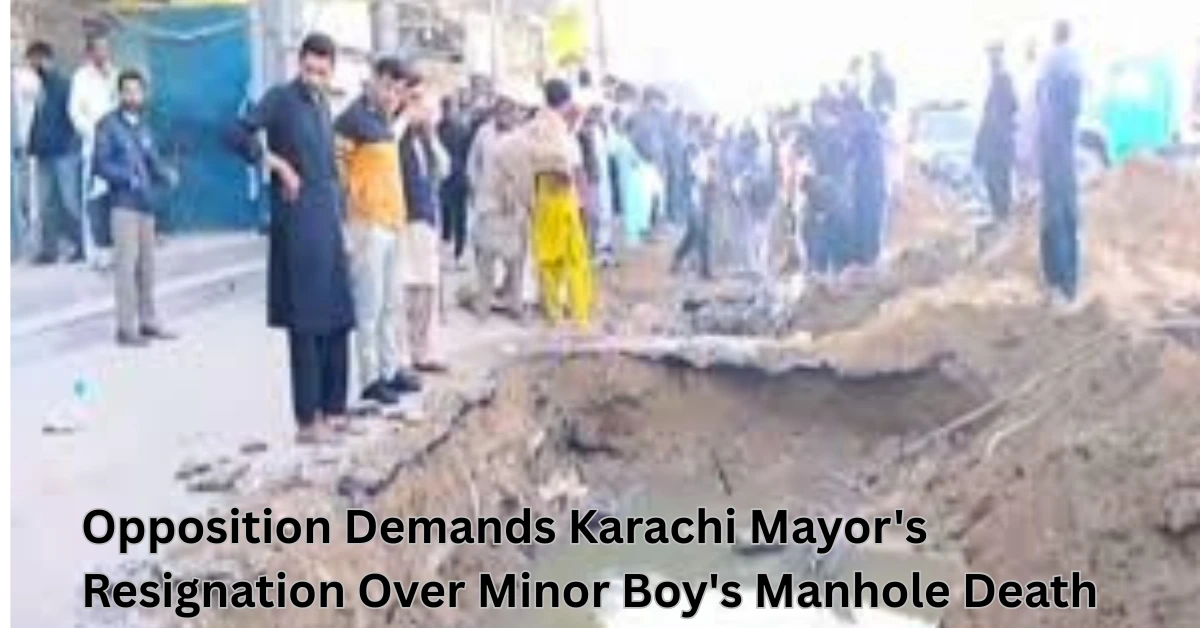
The Karachi manhole death involving a three-year-old boy has unleashed grief, anger, and a citywide debate about civic responsibility and the state of Karachi’s infrastructure. The heartbreaking incident, which took place near the Nipa flyover, has become yet another reminder of how neglected manholes and delayed emergency responses can lead to preventable tragedies — an issue repeatedly highlighted by outlets such as BBC News and locally documented by newscloud.pk in their civic-safety reports.
The child, Ibrahim, slipped into the uncovered manhole while his family was shopping. Despite frantic efforts, his body was recovered nearly 14 hours later from a drain located about one kilometre downstream. The extended delay fueled widespread public fury, with many questioning whether the tragedy could have been avoided with timely coordination, machinery, and basic civic vigilance. The Karachi manhole death has now become a symbol of systemic failure. 💔
Political uproar as lawmakers demand accountability
The Sindh Assembly witnessed intense scenes the next morning, with opposition lawmakers condemning the Karachi administration. Many accused the authorities of ignoring repeated warnings from residents about the dangerously open manhole. Political parties, including members of Jamaat-e-Islami and MQM-Pakistan, demanded that Karachi Mayor Murtaza Wahab step down. Outlets like Reuters have often documented how municipal mismanagement in major South Asian cities leads to fatal consequences — and this tragedy adds painful proof.
 Cyclone Shakhti Intensifies — Rough Seas & Heavy Gusts Expected
 Islamabad Suicide Blast: 12 Martyred in Deadly Court Attack
JI MPA Muhammad Farooq termed the Karachi manhole death a “crime of negligence,” while MQM-P MPA Taha Ahmed questioned why families themselves had to arrange machinery despite multiple public representatives being present. Their arguments echoed what Dawn has frequently highlighted: Karachi’s civic systems remain overstretched and often unresponsive.
Residents say warnings were ignored 😠📞
Perhaps the most disturbing revelation is that residents reportedly made more than 40 calls and sent emails throughout the night to alert municipal authorities about the missing manhole cover. However, locals claim that only a single BRT engineer turned up as various departments passed blame between each other. This delay in the rescue response further aggravated the public, especially parents who gathered at the scene through the night.
Protests soon erupted at Nipa Chowrangi, with residents burning tyres and demanding swift justice. Many said the excavation done during the rescue attempt has now created an additional safety risk. Their concerns echo warnings earlier raised by Al Jazeera on the dangers of neglected urban infrastructure and by UNICEF on the importance of child-safe public spaces.
Lawmakers urge stronger laws and punishments
Independent MPA Rehan Bandukda spoke emotionally about the unimaginable agony experienced by the child’s parents, criticising authorities for lacking even basic equipment to conduct rescue operations. He urged lawmakers to draft legislation enabling the suspension or dismissal of officials who fail in their duty — a demand that gained significant public support online following the Karachi manhole death.
Another MPA argued that Karachi’s infrastructure issues persist because civic departments often lack coordination. Many pointed out that Karachi has faced repeated accidents involving open manholes, all of which were documented extensively by local media, including newscloud.pk, yet little preventive action was taken.
Government response and official statements 📝
Sindh Senior Minister Sharjeel Inam Memon offered condolences and backed a full investigation into the incident. He maintained that the mayor and rescue teams reached the site within 15 to 30 minutes, though residents dispute this timeline. Memon emphasized that no official — including himself — is above the law and that criminal negligence will be punished. His remarks align with global standards of municipal accountability highlighted in studies referenced by Reuters.
 Lahore AQI Hits Dangerous Peak After Diwali Fireworks
Mayor Murtaza Wahab also ordered a formal inquiry, noting that CCTV footage from the nearby store has been obtained. He insisted that the matter was being politicized, but affirmed that he stood with the grieving family. Wahab added that the Karachi Water & Sewerage Corporation (KWSC) has been instructed to determine why the manhole was left uncovered and whether any complaints were overlooked prior to the incident.
Why the Karachi manhole death must become a turning point
The Karachi manhole death is not an isolated tragedy; it is a reflection of deeper structural issues involving poor maintenance, theft of manhole covers, slow emergency responses, and unclear departmental responsibilities. Karachi, a megacity of over 20 million, continues to struggle with ageing drainage lines and understaffed municipal bodies.
Experts have repeatedly warned — including reports cited by The Guardian — that urban public-safety failures often prove fatal for children. The city must now adopt modern civic-monitoring systems, better complaint-tracking mechanisms, and stricter accountability laws to ensure no family suffers the same devastating loss.Karachi Manhole Death.
FAQs
1. What caused the Karachi manhole death?
Karachi Manhole Death occurred because a manhole near Nipa flyover was left uncovered, causing a three-year-old boy to fall into it.
2. Why are political leaders demanding the mayor’s resignation?
Opposition lawmakers believe the city administration failed to address known civic hazards and ignored resident complaints.
3. Was there a rescue delay?
Residents claim they contacted authorities repeatedly, but official machinery arrived late, worsening the situation.
4. What actions have been initiated?
The Sindh government and Karachi mayor have ordered inquiries, and negligent officials may face legal consequences.
5. Can similar incidents be prevented?
Yes — with better civic inspection, secure manhole covers, faster emergency responses, and strict accountability laws.