Introduction — A Much-Needed Price Cut
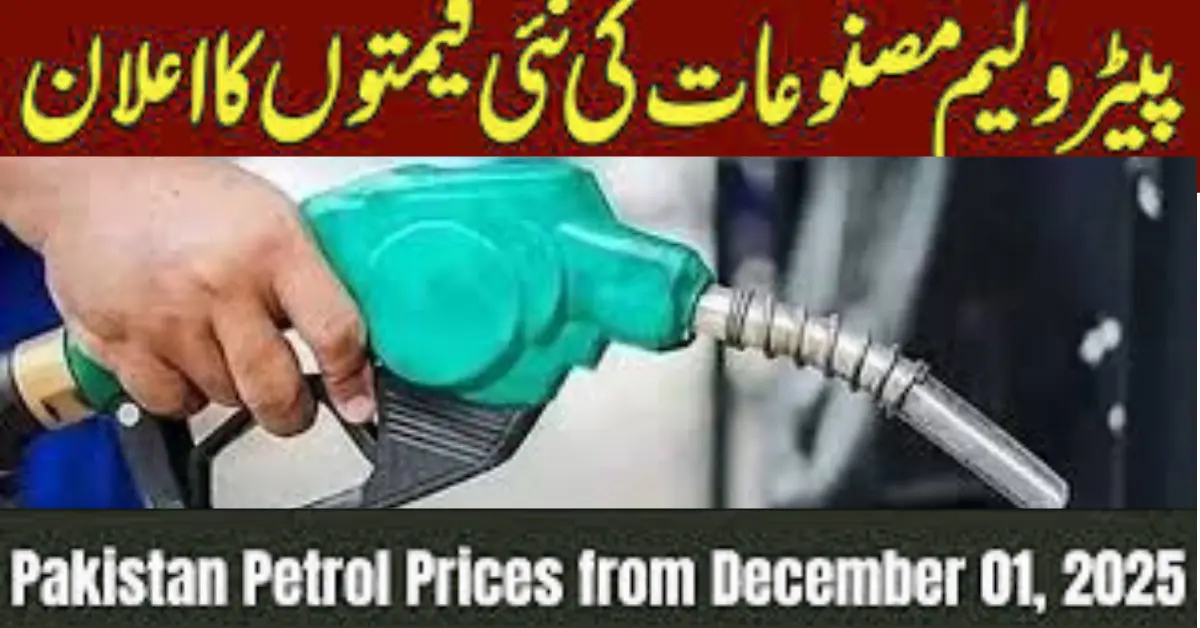
In a significant development welcomed by millions of consumers, the government has officially reduced petrol prices in Pakistan starting from December 01, 2025. At a time when household budgets are already squeezed by rising living costs, this price revision brings a breath of relief to motorists, transporters and small businesses nationwide.
According to the latest notification released by the authorities, the new petrol rate has been cut by Rs2 per litre, setting the revised price at Rs263.45 per litre. Diesel prices — a major cost component in Pakistan’s transport and logistics ecosystem — have also been slashed, with high-speed diesel (HSD) coming down by Rs4.79, settling at Rs279.65 per litre. These reductions follow the government’s fortnightly fuel price adjustment mechanism, which evaluates the impact of global oil prices, import premiums, and exchange-rate fluctuations.
Understanding the Price Review Process 🔍
The mechanism for revising petrol prices in Pakistan operates on a consistent two-week cycle. During each review, the Oil and Gas Regulatory Authority (OGRA) compiles a comprehensive pricing summary that factors in global crude oil trends, refining costs, international freight charges, and the strength or weakness of the Pakistani rupee. This summary is then submitted to the Petroleum Division, which reviews, finalizes and forwards its recommendations to the Ministry of Finance. The Prime Minister gives the final approval before the new prices are announced. The latest price revision — effective December 1 — reflects a continuation of this established procedure.
 Cyclone Shakhti Intensifies — Rough Seas & Heavy Gusts Expected
 پاکستان علاقائی سرمایہ کاری مرکز: شہباز شریف
Why the Price Reduction Happened — Key Factors ✨
The December 2025 price cut is driven primarily by a slight dip in international crude oil values over the last fortnight. Global oil markets have remained volatile due to shifting geopolitical tensions, fluctuating OPEC output decisions and weaker-than-expected demand forecasts. However, a temporary cooling in benchmark crude prices allowed Pakistan to adjust local fuel rates downward. Another contributing factor is minor stability in the rupee, which helped reduce the cost of importing petroleum products. Lower premiums on refined products and a reduced import bill further strengthened the case for reducing petrol prices in Pakistan.
Market Expectations vs. Actual Decision 📊
Before the formal announcement, early estimates circulating in the media projected that petrol prices could drop anywhere between Rs3.70 to Rs6.35 per litre. Similarly, high-speed diesel was expected to decline by nearly Rs4.28 per litre, while kerosene oil and light diesel oil were anticipated to fall by Rs0.73 and Rs6.35 respectively. While the final reduction for petrol was slightly lower than the higher-range estimates, the cut still falls within the expected range and offers notable relief for consumers already navigating inflationary challenges.
Impact on Consumers — What This Means for Daily Life 🚗💡
The updated petrol prices in Pakistan have a direct and immediate effect on the average motorist. Even a Rs2 reduction per litre can translate into meaningful monthly savings for those commuting daily. For transport vehicles such as buses, trucks, ride-hailing services, delivery fleets and small commercial vehicles, the diesel price cut is even more impactful. Diesel is the backbone of Pakistan’s transport and distribution chain, and any relief directly lowers transportation costs. This may also slow down price increases of essential goods being transported across provinces.
Economic Implications for the Coming Fortnight 📅📈
Economists believe that recurring reductions in petrol prices in Pakistan can have a cooling effect on inflation, especially transport inflation, which often triggers cascading price hikes in food, construction supplies and consumer goods. Although the reduction is modest, its timing is crucial. Businesses entering the year-end phase often see elevated costs, and a fuel price cut can ease pressure on margins. The fortnightly review due in mid-December will further determine whether this downward trend continues or reverses based on global oil performance.
Broader Regional and Global Factors 🌍
Pakistan’s fuel pricing model is heavily influenced by international developments. Global oil benchmarks — including Brent Crude and WTI — have shown inconsistent performance due to geopolitical tensions in the Middle East, shifting U.S. inventory levels and uncertain Chinese demand forecasts. With oil-producing nations debating output cuts, analysts predict a mixed pricing trend for the next quarter. This uncertainty means petrol prices in Pakistan will remain sensitive to global shocks in the coming months.
 Inside the High-Stakes Pakistan-Taliban Talks in Istanbul
 Islamabad Suicide Blast: 12 Martyred in Deadly Court Attack
Where to Follow Reliable Fuel Price Updates 🔗
Consumers who wish to stay updated on official petroleum notifications can regularly check reputable sources such as Reuters, Dawn, The Express Tribune, and OGRA’s official communication channels. For Pakistan-specific news, fuel rate alerts and detailed economic reporting, readers can also visit NewsCloud.pk, where regular updates and expert analyses are published.
Looking Ahead — What to Expect Next? 🔮
As Pakistan moves through the winter season, energy consumption patterns may shift. If global oil prices remain stable or decline further, the next fortnightly review could bring additional relief. However, the opposite remains equally possible if geopolitical events disrupt crude supply chains. Monitoring upcoming OPEC meetings, currency movement and global inflation reports will help predict the next cycle of petrol prices in Pakistan. Experts advise keeping an eye on international crude markets, as any sharp rise could quickly reverse the current downward trend.
Final Thoughts
The latest revision of petrol prices in Pakistan is a welcome attempt by the government to cushion the economic strain on the public ahead of the new year. While the cuts are modest, they reinforce the importance of a transparent fortnightly review system and highlight the country’s economic vulnerability to international oil trends. Motorists, transporters and small businesses will enjoy short-term relief, but long-term stability will depend largely on global conditions and domestic fiscal policy decisions.
FAQs
- What is the new petrol prices in Pakistan from December 01, 2025?
The new petrol prices in Pakistan stand at Rs263.45 per litre. - How much has diesel price decreased?
Diesel has been reduced by Rs4.79 per litre, bringing it to Rs279.65. - How often are petrol prices in Pakistan updated?
Fuel prices are revised every 15 days through a government-OGRA mechanism. - What influences fuel prices the most?
Global oil rates, exchange rate changes, import premiums and taxation policies. - Where can I check reliable fuel price updates?
Trusted outlets include Dawn, Reuters, Express Tribune and NewsCloud.pk.