IMF Briefed on Pakistan Flood Economic Challenges
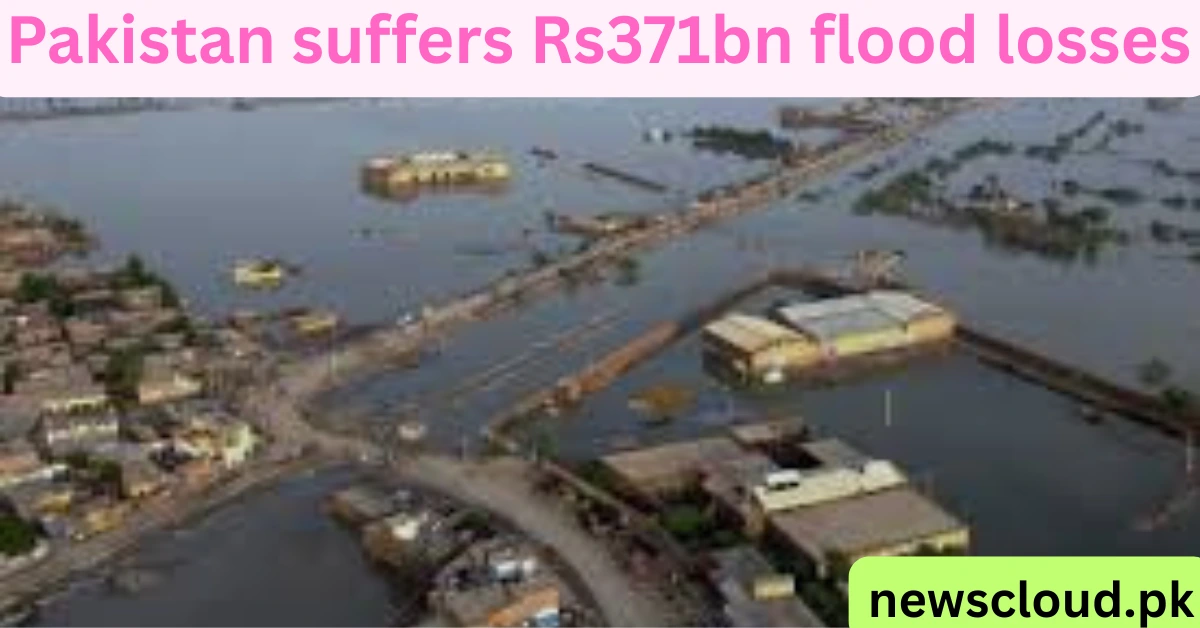
Islamabad — Pakistan flood losses have reached a staggering Rs371 billion, forcing the government to cut its GDP growth target from 4.2% to 3.9% for the fiscal year 2025-26. The Ministry of Finance shared these figures with the International Monetary Fund (IMF) during an ongoing review mission, emphasizing that the country now requires $26 billion in external financing. Finance Minister clarified that despite the heavy burden, no flood tax will be imposed on citizens.
Agriculture and Infrastructure Hit Hard 🌾🏚️
The Pakistan flood devastated multiple sectors of Pakistan’s economy. Around 3.26 million acres of crops were destroyed, alongside 12,569 houses, 2,133 km of roads, and 248 bridges. Educational and healthcare facilities also suffered major setbacks, with 1,098 schools and 128 health centers damaged. Agriculture endured the largest blow with losses of Rs155 billion, reducing its growth forecast from 4.5% to 4%. Cotton production is expected to fall by 1.5 to 2 million bales, while rice output may drop by 0.7 to 1.3 million tons. Sugarcane and maize have also suffered, with losses between 0.5 to 4.3 million tons. Overall, crop sector growth is expected to fall from 6.7% to 4.5%. The industrial sector will slow from 4.3% to 4.2%, while the services sector will decline from 4% to 3.7%.
Humanitarian Impact: Lives and Livelihoods Lost 💔
The human tragedy is equally devastating. At least 1,006 people lost their lives, while more than 1,063 were injured. The floods also killed nearly 10,991 livestock, further damaging rural livelihoods. Province-wise, Khyber Pakhtunkhwa (KPK) was hit hardest with 504 deaths and 3,222 houses damaged, followed by Punjab with 304 deaths and 238 houses damaged. Balochistan faced the worst destruction of property with over 5,000 houses destroyed, while Sindh, AJK, GB, and Islamabad also suffered significant human and structural losses.
IMF Briefing: Pakistan’s External Financing Needs 💵🌍
The IMF was informed that Pakistan requires $26 billion in external financing for the ongoing fiscal year, with $12 billion expected to be rolled over by friendly countries, particularly China. To strengthen reserves, Islamabad plans to launch a Panda Bond worth $250–300 million in November 2025 in the Chinese market, followed by another issue in April 2026. A Eurobond may also be launched in the last quarter of FY26, provided that global interest rates ease and Pakistan’s credit rating improves. For official details, visit the International Monetary Fund website.
Sector-Wise Impact 📊
The housing sector growth fell by 0.4%, infrastructure by 1.74%, electricity, gas and water supply dropped from 3.5% to 2.9%, agriculture slowed by 0.5%, industry dipped by 0.1%, and services contracted by 0.3%. These figures reflect how deeply Pakistan flood losses have reshaped the entire economic outlook for FY26.
Outlook for Pakistan’s Economy 📉
Pakistan faces an uphill battle to stabilize growth. While the government rules out imposing new taxes, reliance on external borrowing highlights its fragile fiscal position. With agriculture production down and infrastructure in ruins, sustaining the revised GDP target of 3.9% will remain a challenge. Economists stress that without stronger climate resilience policies, Pakistan will continue to face severe economic shocks whenever floods strike.
Get updates about all national an international news on newscloud.pk.
FAQs ❓
Q1: What is the estimated total loss from Pakistan flood?
The total Pakistan flood loss is around Rs371 billion.
Q2: How has the GDP target changed?
The GDP growth target was cut from 4.2% to 3.9%.
Q3: Which sector suffered the most?
The agriculture sector, with losses of Rs155 billion.
Q4: How many people lost their lives in the Pakistan flood?
At least 1,006 people lost their lives.
Q5: Will Pakistan impose a flood tax?
No, the Finance Ministry has confirmed there will be no flood tax.