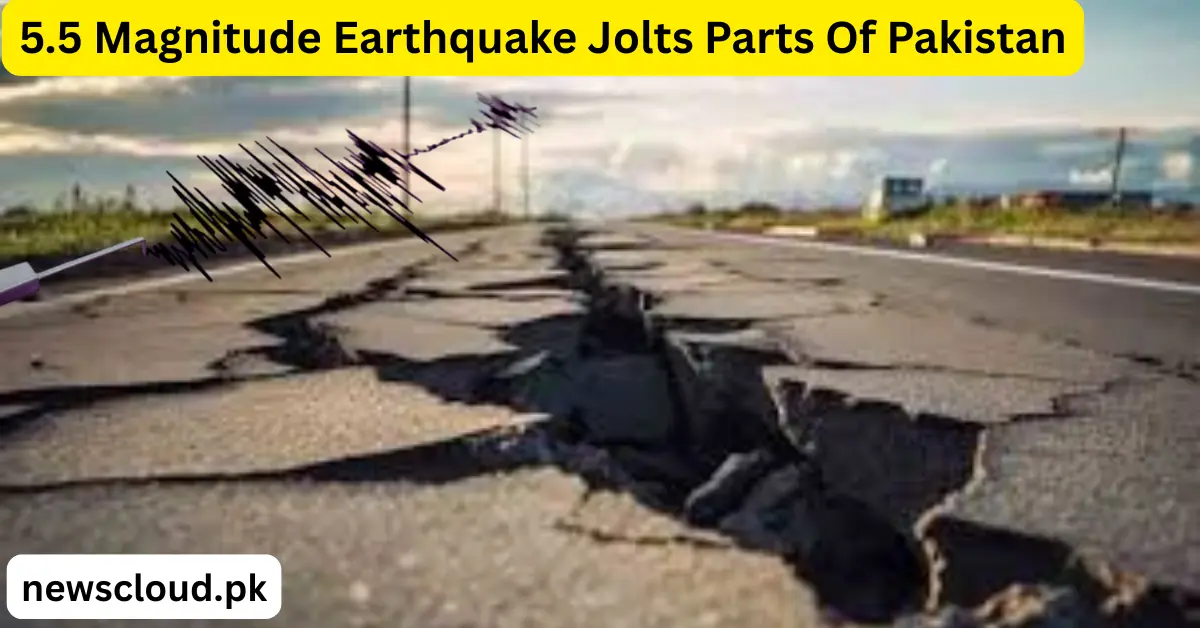
Strong Shakes Create Panic Across Northern Pakistan
ISLAMABAD: Residents of Punjab, Khyber Pakhtunkhwa (KP), and the federal capital Islamabad were jolted awake on Friday morning as earthquake tremors rippled across the region. According to the Seismological Center, the earthquake registered 5.5 magnitude on the Richter scale with its epicenter in the Hindu Kush region of Afghanistan.
The tremors were felt widely in major cities and towns, creating panic among citizens who rushed out of their homes and offices for safety. With Pakistan located in a seismically active zone, experts continue to warn about the increasing frequency of such tremors.
Cities and Areas Affected
The earthquake was reported across several parts of Punjab and KP, and Northern Pakistan with strong tremors shaking Islamabad and Rawalpindi. Other affected areas included Peshawar, Swat, Upper Dir, Bisham, Attock, and Chitral. Eyewitnesses shared that furniture and windows rattled during the quake, while many residents rushed to open spaces in fear of aftershocks.
Further reports confirmed tremors in districts such as Mianwali, Gujranwala, Malakand, Abbottabad, Mardan, Hangu, Nowshera, Battagram, Bajaur, Mohmand, and Buner. Thankfully, no immediate reports of casualties or structural damage have surfaced, though authorities remain on high alert.
Technical Details of the Quake
Seismologists confirmed that the tremors originated in Afghanistan’s Hindu Kush mountain range, a known hotspot for tectonic activity. The earthquake struck at a depth of 195 kilometers, which helped minimize its destructive potential on the surface. Despite this, the widespread tremors were strongly felt across large parts of northern Pakistan.
This was not the first quake of the month. Earlier in September, a separate earthquake was recorded in similar regions, with tremors spreading from the Hindu Kush to Punjab and KP. That quake was reported at a depth of 111 kilometers, further highlighting the seismic activity in the region.
Ongoing Tectonic Activity
Northern Pakistan lies at the junction of the Eurasian and Indian tectonic plates, making it one of the world’s most earthquake-prone zones. Experts caution that while deep-focus earthquakes like the recent one may not cause large-scale destruction, they are a clear reminder of the risks posed by active fault lines in the region.
Over the past decade,Northren Pakistan has witnessed several devastating earthquakes, including the catastrophic 2005 Kashmir earthquake that claimed thousands of lives. Although recent tremors have been moderate, scientists stress the importance of preparedness, particularly in densely populated urban areas.
Public Response and Safety Concerns
Following Friday’s tremors, panic was reported in several cities. People rushed outdoors, abandoning homes, schools, and workplaces as a precaution. Emergency services issued advisories urging citizens to remain calm but vigilant, emphasizing the importance of safety protocols during earthquakes.
Authorities also urged residents to stay informed through official channels and avoid spreading rumors on social media that could create unnecessary panic. While structural damage has not yet been reported, inspections are being carried out in various districts to ensure public safety.
Importance of Earthquake Preparedness
The repeated tremors in recent months have reignited discussions about disaster management in Pakistan. Experts recommend that citizens familiarize themselves with basic safety measures such as:
-
Drop, Cover, and Hold during tremors to minimize injuries.
-
Identifying safe spots within homes, such as under sturdy furniture.
-
Preparing emergency kits with essentials like water, food, and first aid supplies.
-
Following official updates from the National Seismic Monitoring Centre (NSMC).
Conclusion
The earthquake that struck on Friday once again highlights the vulnerability of Northren Pakistan to seismic activity. With its location along one of the world’s most active tectonic boundaries, the country remains exposed to periodic tremors. While no major damage was reported this time, the incident serves as a wake-up call for citizens and authorities alike to prioritize disaster preparedness and ensure resilient infrastructure.
For more intersting news must follow our website newscloud.pk.
FAQs
Q1: What was the magnitude of the earthquake in Punjab, Northern Pakistan, and Islamabad?
The earthquake measured 5.5 on the Richter scale and was felt across several regions, including Islamabad, Rawalpindi, and northern Pakistan.
Q2: Where was the epicenter of the earthquake located?
The epicenter was in the Hindu Kush region of Afghanistan, a known hotspot for seismic activity.
Q3: Was there any damage reported after the earthquake?
So far, no major damage or casualties have been reported. Authorities are conducting inspections to ensure public safety.
Q4: Why does Northern Pakistan experience frequent earthquakes?
Northern Pakistan is located near the Eurasian and Indian tectonic plate junction, which makes it prone to frequent seismic activity.
Q5: What safety steps should people take during an earthquake?
Experts recommend following the “Drop, Cover, and Hold” method, moving to open spaces, staying away from windows, and keeping emergency kits ready.