Pakistan’s Poverty Reverses After Years of Decline
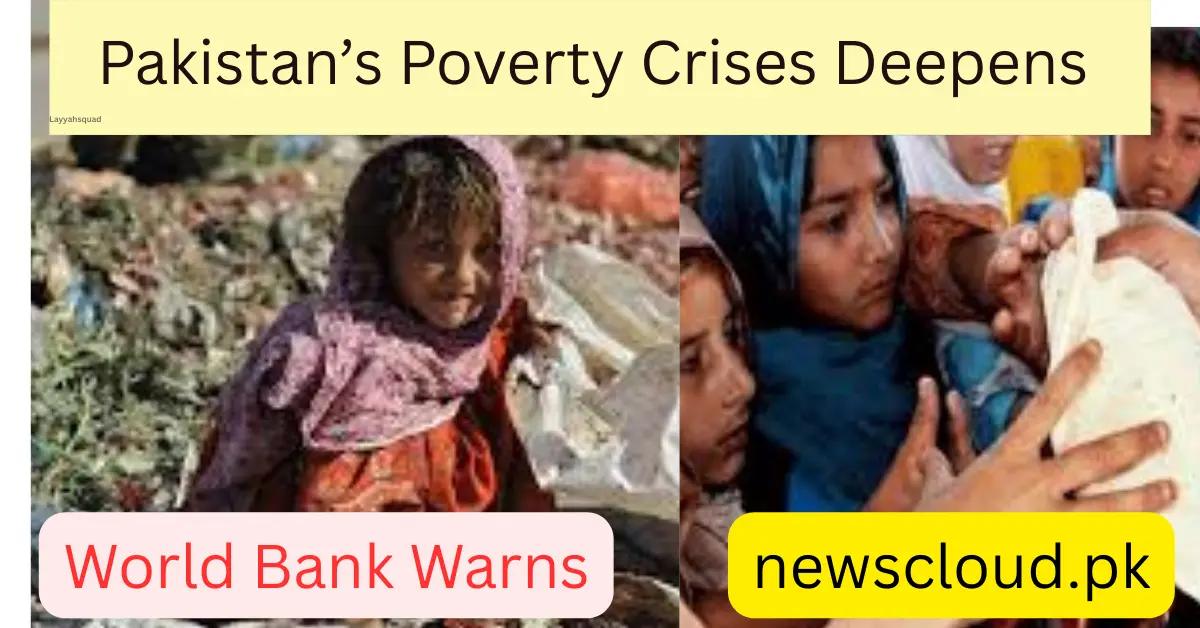
After nearly two decades of steady decline, Pakistan’s poverty rate is once again rising, according to a new World Bank (WB) report released on Tuesday. The study, titled Reclaiming Momentum Towards Prosperity: Pakistan’s Poverty, Equity and Resilience Assessment, paints a concerning picture of how economic shocks and structural weaknesses are reversing hard-won progress.
Between 2001-02 and 2018-19, Pakistan’ poverty dropped significantly — from 64.3% to 21.9%. However, since 2020, the trend has shifted upward due to multiple crises, including the COVID-19 pandemic, record-high inflation, climate disasters such as devastating floods, and prolonged macroeconomic instability.
Why Pakistan’s Poverty Is Rising Again 📊
The World Bank noted that while Pakistan’s earlier progress was driven by shifts from farm labor to non-agricultural jobs, the country’s growth model has now reached its limits. Reliance on consumption-driven growth has left the economy vulnerable to external and internal shocks.
According to the study, over 85% of jobs in Pakistan are still informal, with limited social protection. Moreover, women and youth remain largely excluded from formal employment opportunities, further slowing progress toward inclusive growth.
Human Development Gaps Remain Stark 🏫💧
The report also shed light on Pakistan’s persistent human development challenges. Nearly 40% of children are stunted due to malnutrition, while one in four primary school-aged children is out of school. Even among those enrolled, three-quarters lack basic reading comprehension skills.
Access to basic services is equally concerning. As of 2018, only half of households had safe drinking water, while nearly one-third lacked proper sanitation facilities. These factors not only deepen inequality but also make it harder for vulnerable families to escape the poverty cycle.
Rural-Urban Divide and Struggling Cities 🏘️
The World Bank emphasized that rural poverty rates remain more than double those in urban areas, with many districts trapped in long-term deprivation. At the same time, Pakistan’s urban centers are facing “sterile agglomeration” — overcrowded growth that fails to improve living standards or generate sustainable economic opportunities.
This combination of weak rural development and ineffective urbanization is preventing the country from fully utilizing its demographic and geographic potential.
What the World Bank Recommends 💡
Senior Economist Christina Wieser, one of the report’s lead authors, stressed that Pakistan must urgently expand access to quality education, healthcare, and clean water, while also creating better jobs for its citizens. She emphasized that reforms should particularly target the bottom 40% of the population, who are most vulnerable to economic shocks.
The World Bank called for:
-
Investment in people and services — especially education, health, and social protection.
-
Progressive fiscal reforms — including improved municipal finance and targeted investment in deprived districts.
-
Inclusive job creation — particularly for women and young people.
-
Stronger safety nets — to protect households from shocks.
-
Better governance and real-time data systems — to monitor progress and support decision-making.
A Call for Inclusive Growth 🌱
World Bank Country Director for Pakistan, Bolormaa Amgaabazar, urged Pakistan to protect its “hard-won poverty gains” and focus on reforms that expand opportunities for marginalized groups. She stressed that by prioritizing results-oriented strategies, Pakistan could get poverty reduction “back on track.”
In January, the World Bank announced a $20 billion commitment under a 10-year country partnership framework to support inclusive and sustainable development in Pakistan. The latest report serves as a reminder that meaningful progress depends not only on external support but also on Pakistan’s commitment to people-focused reforms.
Conclusion 🌍
The rise in Pakistan’s poverty rate underscores the urgent need for structural reforms that prioritize people over consumption-driven growth. From improving education and healthcare to creating formal job opportunities and empowering women and youth, Pakistan must act swiftly to protect millions of vulnerable families. The World Bank’s warning makes it clear: without bold reforms, risks undoing decades of progress in Pakistan’s poverty reduction. Read more..
For more such type of news must visit our website newscloud.pk.
❓ FAQs on Pakistan’s Poverty
Q1: Why is Pakistan’s poverty rate rising again?
Poverty is increasing due to multiple shocks such as COVID-19, inflation, floods, and a growth model that has reached its limits.
Q2: What did the World Bank highlight in its latest report?
The report stressed Pakistan’s human development deficits, slow job creation, and the urgent need for people-focused reforms.
Q3: How does rural poverty compare to urban poverty in Pakistan?
Rural poverty is more than double the urban rate, with many rural districts facing chronic deprivation.
Q4: What reforms does the World Bank recommend for Pakistan?
Key recommendations include investing in education, healthcare, safe water, inclusive job creation, fiscal reforms, and stronger safety nets.
Q5: How is the World Bank supporting Pakistan?
In January, the World Bank committed $20 billion under a 10-year framework to support inclusive and sustainable development in Pakistan.